
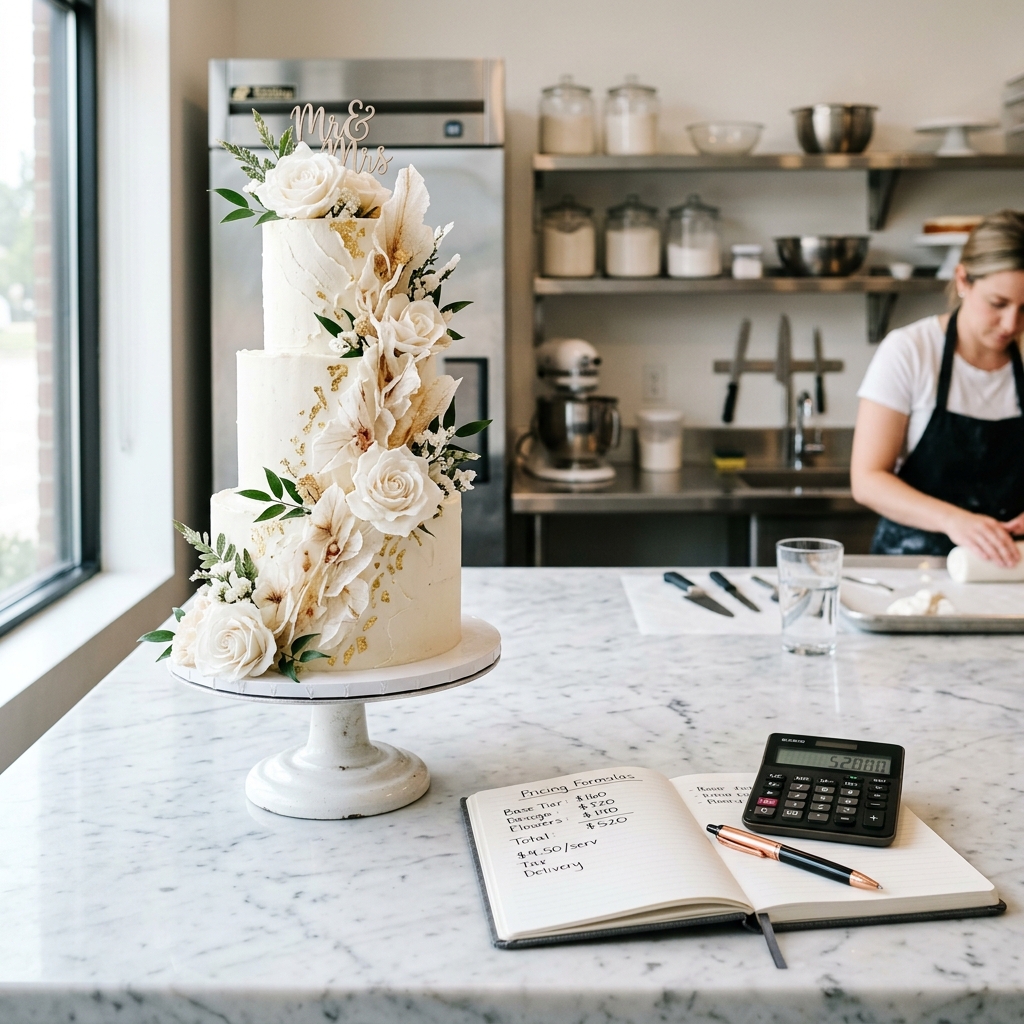
Learn the exact formula to price your homemade cakes profitably. Discover how to calculate ingredients, labor, and packaging to guarantee profit on every order.
📑 Table of Contents
- How to Price Your Homemade Cakes: A Simple Formula That Actually Works (2026 Guide)
- 1. Introduction: Why most bakers underprice (and lose money)
- 2. The 3 Costs You MUST Track
- 3. The Simple Pricing Formula
- 4. Common Pricing Mistakes (and how to avoid them)
- 5. Free Tool: Download our Bakery Profit Calculator
- 6. Quick Reference: Pricing Cheat Sheet (PDF download)
- 7. Conclusion: Price with confidence
How to Price Your Homemade Cakes: A Simple Formula That Actually Works (2026 Guide)
Pricing custom cakes is often the most stressful part of running a home bakery business. Many beginners wonder, "how to price homemade cakes" without scaring away customers or, worse, losing money. The truth is, most bakers underprice their creations because they only look at grocery store prices instead of calculating their actual costs. If you want a sustainable business, you need a reliable cake pricing formula.
1. Introduction: Why most bakers underprice (and lose money)
When you undercharge, you're not just giving away a cake; you're giving away your time, electricity, and expertise for free. A custom cake takes hours to bake, cool, fill, crumb-coat, and decorate. If you're using a generic cake pricing guide without doing the math, you might end up earning less than minimum wage. The goal is to price with confidence so you can stop guessing and start earning.
2. The 3 Costs You MUST Track
Ingredients (with real examples)
You must calculate the exact cost of every ingredient. Don't guess! A recipe costing template is essential here. For example, if a bag of flour costs $5 and you use 1/5th of it, that's $1 for your cake cost. Remember to include the butter, sugar, eggs, vanilla extract, and even the pinch of salt.
Packaging (boxes, ribbons, labels)
Packaging is a hidden cost that eats into profits. Cake boxes, cake drums, dowels, parchment paper, and custom labels all cost money. If a heavy-duty cake box and drum cost you $4, that $4 must be added to your base cost before you even calculate profit.
Labor (the hidden profit-killer)
This is where the real labor cost calculation comes in. You are the head baker, dishwasher, and decorator. You must pay yourself an hourly wage. If you want to make $20 an hour and a custom cake takes 4 hours from start to finish, your labor cost alone is $80.
3. The Simple Pricing Formula
Here is the golden rule for your home bakery pricing guide:
Total Cost (Ingredients + Packaging + Labor) × 3 = Minimum Selling Price
Why times 3? The multiplier covers your overhead (electricity, water, equipment wear-and-tear) and ensures a healthy profit margin to reinvest in your small bakery management.
When to use 4x or 5x
For high-stress, high-stakes events like weddings or holidays, you should increase your multiplier. Wedding cakes require consultations, tastings, delivery, and complex structural work. A 4x or 5x multiplier is standard in the industry for these premium services.
4. Common Pricing Mistakes (and how to avoid them)
- Competing with Supermarkets: Your home bakery business creates custom, fresh, preservative-free art. Supermarkets mass-produce frozen cakes. Never compare your prices to theirs.
- Forgetting Overhead: The oven uses electricity, the sink uses water. Your multiplier covers this.
- Not Getting Paid Upfront: Always require a non-refundable deposit to secure the date. This protects your time and ingredient investment.
5. Free Tool: Download our Bakery Profit Calculator
To make this process effortless, you don't have to build a complex spreadsheet yourself. Try our Bakery Profit Calculator Bundle. It's an all-in-one bakery profit calculator and cake costing calculator free of headaches. It includes both a Google Sheets template and a 100% Offline Desktop App to calculate your exact costs and recommended selling price instantly.
6. Quick Reference: Pricing Cheat Sheet (PDF download)
Create a standard menu for basic cakes. For example, a basic 8-inch buttercream cake might have a starting base price of $75. Any custom fondant work, sugar flowers, or premium fillings are added on top of that base price. Keeping a cottage food spreadsheet or cheat sheet handy will help you quote prices quickly when customers ask, "how much to charge for custom cakes".
7. Conclusion: Price with confidence
Stop apologizing for your prices. When you use a mathematical formula to determine your costs, you can hand a quote to a customer with absolute confidence. They are paying for a premium, custom product.
Turn Your Passion into a Bakery Pro Business
Join 500+ home bakers who use our software to automate pricing, manage orders, and grow their profits.
Save Your Calculations?
Get the Bakery Business OS to save recipes, track inventory, and manage orders in one place.
Reclaim Your Time →Buy Bakery Profit Calculator Bundle